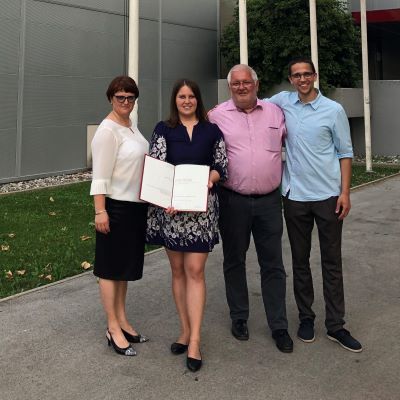
Petra Štukelj, BSc in Business and Economics, local tourist guide, a nature, photography, and history lover. I was born and raised in a family with a long tourism history.
At the end of the third year of the Grammar School in Novo mesto, we got a task to organizing a trip around Slovenia. My class decided to spend three days in the "unknown" part of the country - Prekmurje. The whole course of the excursion, all reservations and timetable were prepared by us, the students. Organizing, planning and solving various logistical problems, peeked my curiosity and made me believe that tourism was might just be the "right" thing for me. When the trip was over, I told my dad that I want to follow his professional path ... and so it happened.
I finished my studies at the Faculty of Economics in Ljubljana, with a focus on tourism. Shortly after we started with the tourist subjects, I realized that we will only be focusing on a part of Slovenia: Ljubljana - Beld - Piran, the leading tourist destinations of our country. Honestly, I wasn’t bothered by it at the beginning, but... the closer we were to the end of the year, the more I felt hurt about the fact that we never heard a word about the tourist offers of eastern Slovenia. And this is what has been driving me since – I want to demonstrate to both foreigners and my fellow countrymen, that Slovenia has much more to offer than just those few destinations. During my studies I got license for a local guide through Dolenjska and Bela Krajina. The desire for work and the belief that tourism is about people and not textbook information led me to quickly finish my studies and get into the tourism industry after receiving my bachelor degree.
After graduating, I got a job in the family-run company Minitour, which has been successfully run by my father for over 30 years. The company has been involved in bus transport for many years, and in the last few we have expanded our business offer to include tourist guiding by acquiring a license for a travel agency. You can read more about the company itself on our website.
We often joke about being an international family. My brother is finishing his doctoral studies in Munich, where he met his better half, who comes from Barcelona. My aunt lives and works in Bruges. Modern technology allows us to keep in contact on a daily basis, bridging the physical distance.
One Saturday, when I was out with my friends for a coffee on the Main Square of Novo mesto, we wondered… How did families keep in touch in the past? How many Slovenians are there around the world, that have lost contact with their distant relatives still living here? And how many Slovenians are there around the world, that would want to explore their Slovenian roots?
One thing led to another and we ended up developing a brand called "Slovenianna roots". In this way, we offer all Slovenes abroad an opportunity to explore their history, to revive their Slovene tradition, and to finally visit the homeland of their ancestors.
…. …. follow our blog and you will find out. New blog post every Tuesday!
Slovenian roots is primarily aimed at all Slovenes, Slovenian foreigners and Slovenian expatriates who want to get in touch their roots, to deepen their knowledge of Slovenian culture, to learn something new, and above all, to get to know our beautiful country.
Most of all, we are a travel agency that wants to create an unforgettable vacation, weekend package or just a day trip around Slovenia. However, being aware of the importance of preserving history, culture and tradition, we decided to approach the matter in a slightly different way. We want all of our guests to have an authentic experience of Slovenia, and learn something new and memorable.
Slovenian roots comes at a variety of different offers and products available to an individual customer. First of all, there is free content - our blog, and Instagram and Facebook pages. We will be releasing new posts, images and videos on all three channels weekly. The main topic of the content? Slovenia, one way or another - lots of nature, culture and tradition, traditional and modern cuisine, stories of our guests and much more.
Another option is a custom compiled e-document presenting the research on customers Slovenian roots, family history, etc. The price of such document is determined individually.
The last but not least is the whole package, which includes the above mentioned options and adds: organization of a personalized trip during which you’ll be exploring Slovenia and learning about Slovenian traditions.
The name Slovenian roots came spontaneously. All the ideas that my family and friends came up with touched three topics: family, Slovenia and history. We ended up with two favourites. And how did the idea that we use today, won? It turned out to be the one with a free domain for our website. Sounds simple, doesn't it? But finding a free domain on the world wide web that you like and that would have some meaning is not that easy!
Often when I sit with my grandmother or other elderly person, they can tell me all about their family history in detail. Every time, I am impressed by the fact that at 80+ year old people still have a remarkable memory and know the so much about their family history. They remember it all, from when someone came to the house, who and when went over the Atlantic to find a better life, to purely unexpected things, such as why did they plant a linden tree in front of the house fifty years ago.
How many relatives does the younger generation know? How many do you know? Do you know who do you share your genes with?
I, honestly, know very little. Despite of all the modern technology, we forget about the basics... Maintaining genuine contacts and remembering our personal history. It is true, that all of these social networks can bring us together and connect, but still… Do we use them to the potential they offer us? Do we use them for personal development or to show others our life in a favourable light?
And to answer that other part of the question... if something is done with your heart and good will nothing is difficult, sometimes it is just a little bigger challenge.
For this post, we decided to do a short interview with our “tamlada” (literally, “the young one”, this is what we call a girl that “marries” into the house). Mónica is from Barcelona, the heart of Catalonia. An energetic, temperamental, talkative and extremely friendly Spanish girl, who enriches our everyday life over and over again. We decided to do this interview, because we were curious about how foreigners see Slovenia, what do they find interesting and what is their opinion about the most unusual thing or habit in the country on the sunny side of the Alps.
Yes, I studied at school that Slovenia was part of Yugoslavia and that the capital is Liubliana (in Spanish), which I found a really strange name at that time. I just knew that they had a good basketball team and that’s it, so I did not have a formed opinion about the country…
I tried homemade “Struklji”, which is like a strudel filled with cottage cheese and egg, and I love it! It became my favorite traditional food from Slovenia; however, I tried it in a restaurant and it did not taste so good… Homemade is always the option to go!
You are always saying your goodbye for a really long time: bye, ciao, see you, God bless you, nice trip…. And I was wondering, why don’t you only say it once and that’s it?
In every gathering I have attended, since I'm part of the family, everyone started singing songs and when I asked about the general thematics of the songs, the vast majority of them were about sad topics (although the melody sounded super happy).
Green. Hospitality. Musical. Family. Cultural.
Thank you Mónica for your time!
Where the Alps meet the Mediterranean and the Pannonian Plain meets the Karst there, in the heart of Europe, is Slovenia. A hidden gem of Europe is full of historical sites and unspoiled nature.
During the Covid-19 pandemic, we were “cut off from the world” and suddenly we had much more time to explore our beautiful country. I decided to spend the »given« time working on the "Slovenian roots" project but also took the opportunity for self-education and, above all, discovering hidden corners of Slovenia.
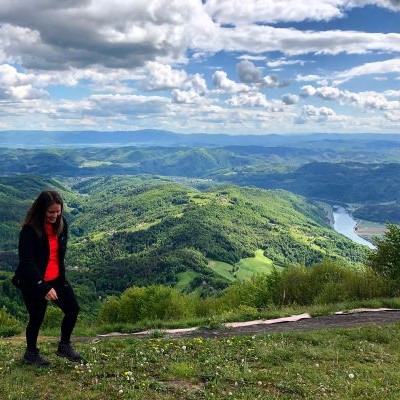
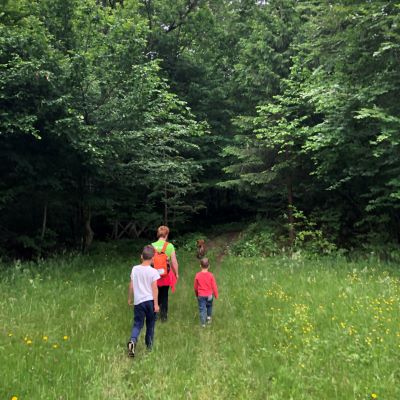
We started by exploring the forest behind our house, then our municipality, and in the last 14 days, when the municipal borders opened, we started to explore the rest of Slovenia. Every time I have a little bit of free time I like to go hiking. Why? Because, only after climbing up the hills we can trully see that we are living in a green paradise. Everytime I reach a top with a good view, I am fascinated by the endless forests, small streams, green rivers and blue sky.
Perhaps this green nature, our "natural respirator", is also a reason why Slovenia is the first European country to declare the end of the pandemic.
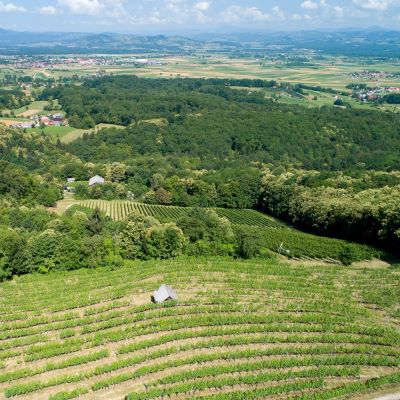
It is known that Slovenes, especially people from Dolenjska region, like to socialize with a glass of good wine in their hand and while enjoying some good food . Since we want to show you Slovenia, its nature and excellent cuisine, we decided this time to dedicate a few words to the typical dish that we love to prepare during the summer.
These are not štruklji, much less potica. It's ember-baked potatoes.
A simple dish that is suitable for everyone – a carnivore, a vegetarian or a vegan – you can eat it as a stand-alone dish or with various toppings.
For ember-baked potatoes we need:
- lots of embers
- potatoes
- aluminum foil
Optional:
- bacon
- cracklings
- curd
- sour cream
- salt/pepper
- ...
Process:
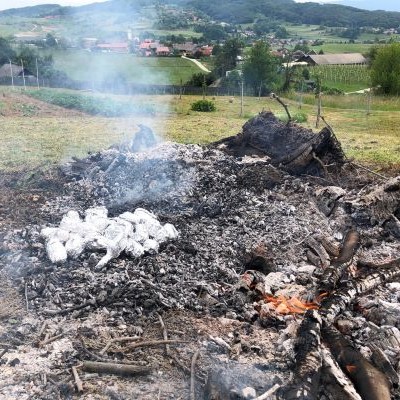
We kindle a fire on a secured area. While it is burning we prepare the potatoes.
We wash them well and wrap them individually in aluminum foil (if you want, you can cut the potatoes in half sandwich a piece of bacon in between).
When the fire burns out and only the smoldering embers remain, move the embers as to create a small “pool” in the middle and place the wrapped potatoes in there, then cover the potatoes back with the surrounding embers.
Leave them to bake for about 50 minutes (depending on the size of the potatoes).
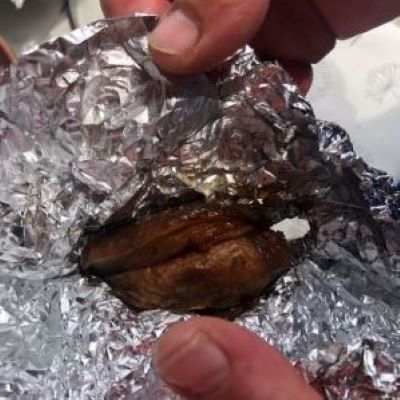
Take the potatoes out of the embers and serve serve them directly in the aluminum foil.
Unwrap the potatoes and add salt, pepper, cracklings, cottage cheese, sour cream or other toppings, if desired.
We ate the delicious ember-baked potatoes this Saturday! We wish you a lot of goodwill and fun when you will prepare it yourself
Bon Appetit!
What is better than concurring a two thousand meters high peak? Concurring a two thousand meters high peak with friends!
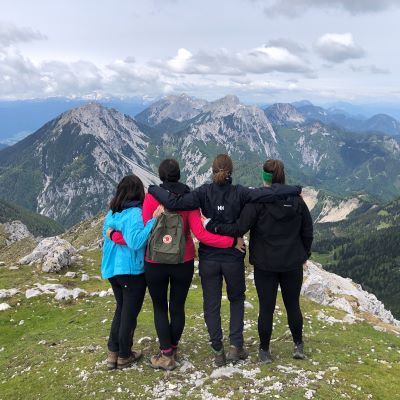
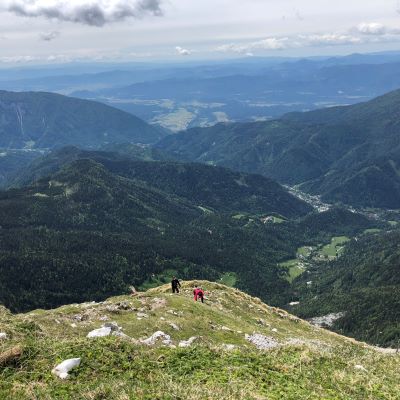
On the last Sunday, I went to the mountains with three of myneighbors and childhood friends. At first the goal was to visit the mountain hut Kofce, known for its excellent štruklji (see the photo below). After a bit under an hour-long hike we arrived at the hut. After a short conversation we quickly agreed that we should walk a bit more given the hour and a half of driving. That’s how an unexpected decision was made… after a good 2 hours of more walking, we reached the peak of the 2088 meter high Veliki vrh (Košuta). Our legs were tired, the stomachs were making a strange noise, and we could feel the wind all the way down to the bones… But that was a small price to pay for the view at the top! Slovenia, Austria, mountains, Bled… everything was beneath us. The experience was extraordinary.
On a day like this, you realize how important socializing and keeping in touch is. A day full of good will, laughter and remembering the good times. And that, my friends, is why we should never really forget where we come from, where our roots are and who are our life-long friends.
It's true that I can barely feel my legs today… but I'm already looking forward to the next trip. Here’s to more of such active days!
#športnodruštvoUIR is conquering Slovenian peaks this year, join us!
If the water would be gold, we could say that Slovenia is one of the richest countries in the world. Water surrounds us everywhere in our country… green river banks, endless lakes, mighty waterfalls, magical underground currents and our Adriatic Sea. Are we aware of how very important it is to appreciate, respect and preserve these natural pearls?
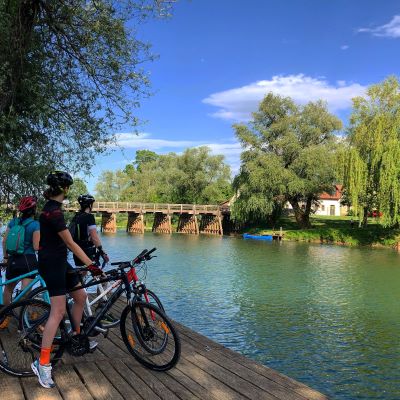
Rivers, streams, lakes and the sea always fill us with good mood, replenish our energy and give us peace. A few days ago we went on a trip to one of the oldest and smallest towns in Slovenia - Kostanjevica na Krki. The old town center was built on the meander of the river Krka and Kostanjevica is the only town that stands on an artificial river island in our country. A place we always like to return to, because its serenity and the might of the Krka River always fill you with incredible energy.
And just as we always like to return to the cities that endow us with positive energy, we should return to the people with whom we have grown together and that helped us become a better person. At this point, I am grateful for all of you who follow me, support me, and help me make my dreams come true.
I’ll take this opportunity to let you know… something very interesting is being prepared in our kitchen and I can't wait to tell you more.
Until then, we read us every Tuesday.
In times of uncertainty due to the Covid-19 pandemic and when the tourism industry is at a standstill, the new beginning depends on the trust of guests. It is important that guests are aware that they can stay with us in a way that does not endanger themselves or others. Due to the changes caused by the pandemic, it is more important than ever to be aware of the situation, to comply with the regulations of the responsible authorities and to return to nature.
Even before the current situation, Slovenia has shown that it is a green oasis that impresses every traveler with its small size and, at the same time, its incomparable naturalness.
In order to maintain and increase its responsibility to passengers and tourism providers, I feel Slovenia has combined all standards into the GREEN & SAFE logo. It marks and emphasizes high hygiene standards, protocols and sustainable recommendations for all those involved in the tourism industry. With the sign, we all want to increase the confidence of guests that Slovenia is a green and safe tourist destination.
Summarized from: I feel slovenia
I’m sitting on the balcony, watching the sunset, and wondering what should I be talking about in the tenth blog. That’s right, we have reached the first round number!
Should I write about the current situation in tourism and bus transport? Better not, it’s a gloomy topic. Should I write about the future of tourism, or the forecasts and the reality? That’s a no as well, because you never really know what the future will bring. Who expected a Covid-19 pandemic in January? You never really know what will happen next. Should I write about tourist vouchers and the government’s help to revive Slovenian tourism? Despite the fact of working with them on a daily basis, I’d prefer to keep my opinions to myself. Perhaps I could write about the thing I have been preparing, that I’m really looking forward to? But then I said to myself... "don't be impatient, wait for another week or two, until everything will be ready".
And then it suddenly I occurred to me... Slovenian music, polyphonic singing.
This weekend was marked by partying. Our neighbor celebrated his 50th birthday.
It is a turning point in one’s life, a half of a century that deserves a celebration until the morning hours.
Even though we, the neighbors, didn’t get to sleep a lot, we were able to enjoy some great music.
Guitar and polyphonic singing is the music for the soul, even if it wakes you up at three or four in the morning.
Slovenes are known for being regularly accompanied by singing, whether it is happy or sad moments, socializing or working in a workshop, the fact is that we are a musical nation.
Music fills us with positive energy, it makes the work easier, and you can never get bored with it.
Is it time for the “singing” tourism?
Are we aware in what a beautiful country do we live? Are we aware of all the green routes and undiscovered destinations that Slovenia has to offer? Do we know of any other tourist destinations besides Bled and Piran? Have we already discovered all the hidden gems that our small, yet so big country has to offer?
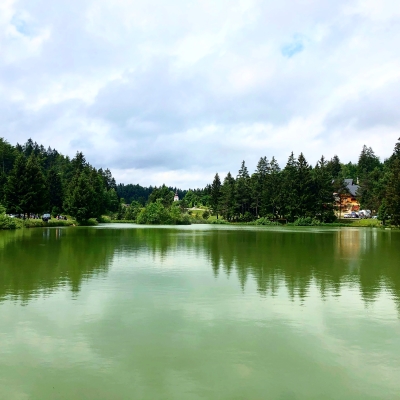
Last week we went on a day trip to Bloke. The Bloke plateau is an extensive bowl-shaped plateau at an altitude of about 700m, which lies on the extreme edge of Notranjska, between Lake Cerknica and the Loka and Ribnica valleys. It is rare to find such a flat and densely populated area at such a high altitude. The plateau is known mainly for its cold winters, unspoiled nature and kind-hearted people.
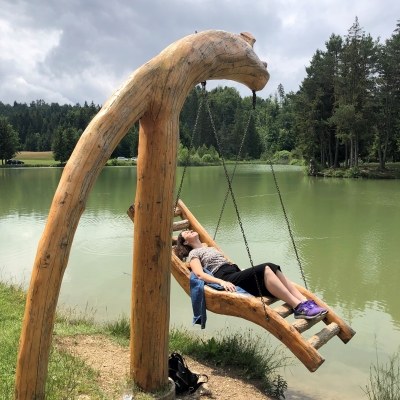
Despite the cold climate and barren soil, we were enchanted by the forest-covered surrounding peaks and the endless plateau. Green Lake Bloke told us to stop for a moment and rest our souls and bodies. The warmth of the wooden sculptures, hand-made by the locals, only enriched our experience further.
Notranjska, you are extremely beautiful, we will definitely be back!
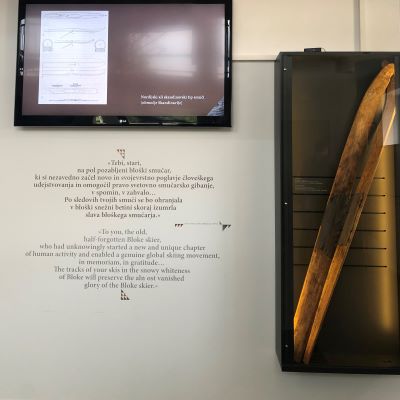
In 1975, Franc Sterle wrote in the Bulletin of Bloke run: “To you, the old, half-forgotten Bloke skier, who had unknowingly started a new and unique chapter of human activity and enabled a genuine global skiing movement, in memoriam, in gratitude… The tracks of your skis in the snowy whiteness of Bloke will preserve the aln ost vanished glory of the Bloke skier.”
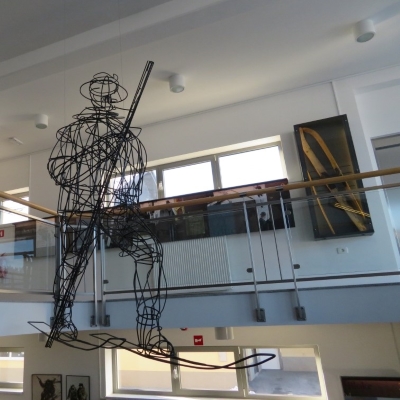
Did you know that Bloke skis are extremely important objects of our cultural heritage? Because of them are the people of Blok considered to be the oldest skiers in the Alps and Central Europe.
Bloke is famous for its harsh and long winters, which is why snow has often covered roads and cart tracks. Because of all the snow, the locals did not even have any other possibility of transport than just skis. For centuries, these short skis were made of beech wood that had only a foot band in the middle. The Bloke skier manage his skis with only one stick. With the skis, the people of Bloke went to all the chores, came to mass, they visited their relatives, went hunting, school… On skis, they also liked to run carnival antics and ask for a good harvest.
In 2014, the Bloke Skier Museum was established in the municipality of Bloke, dedicated to Bloke skiers, the people of Bloke and the preservation of the cultural heritage of this area. The museum, which will bring you closer to the cold winter of Bloke, the kind language of the locals and their way of life, is a great idea for a day trip.
Just as the Bloke skier is half forgotten, so (unfortunately) the whole of Notranjska is. It is extremely close to all of us, geographically, and yet it seems as if it is light years away from us.